How Social VR Is Transforming Online Interaction
Discover how Social VR is changing communication, entertainment, collaboration, gaming, and digital communities through immersive virtual experiences.
How Social VR Is Transforming Online Interaction
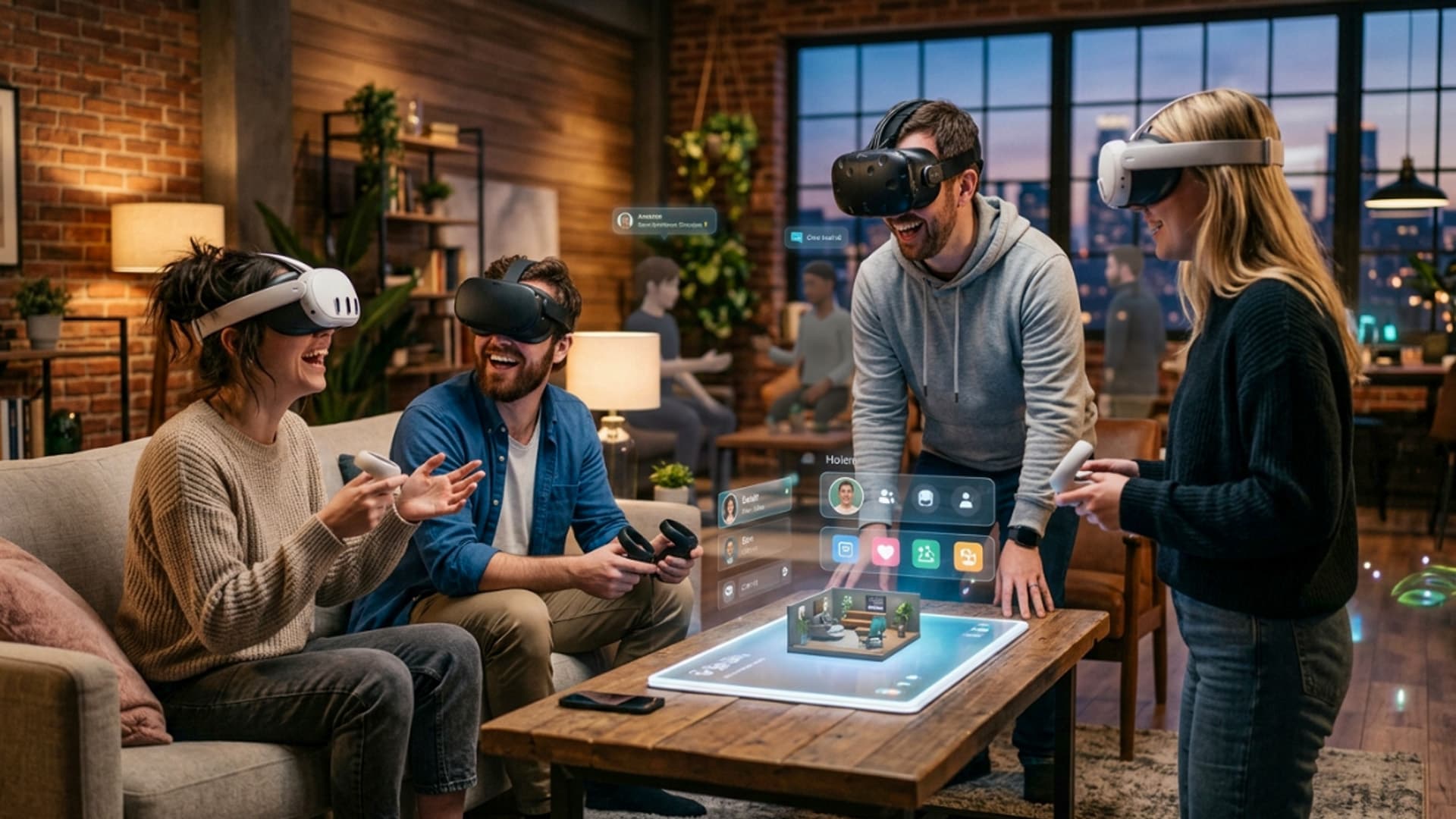
Social VR is becoming one of the most important developments in modern immersive technology. While traditional social media platforms allow people to communicate through text, images, and video, Social VR introduces a completely different type of digital interaction. Instead of viewing content on flat screens, users can enter shared virtual environments where communication feels significantly more natural and immersive.
Virtual reality technology is changing how people connect online by creating digital spaces that simulate physical presence. Users can speak to each other naturally, move through environments together, collaborate on projects, attend virtual events, and participate in experiences that feel much closer to real-world interaction.
As VR hardware becomes more accessible and internet infrastructure continues improving, Social VR is rapidly expanding across entertainment, gaming, business collaboration, education, and online communities. Many technology companies believe immersive communication will become a major part of the future internet experience.
What Is Social VR?
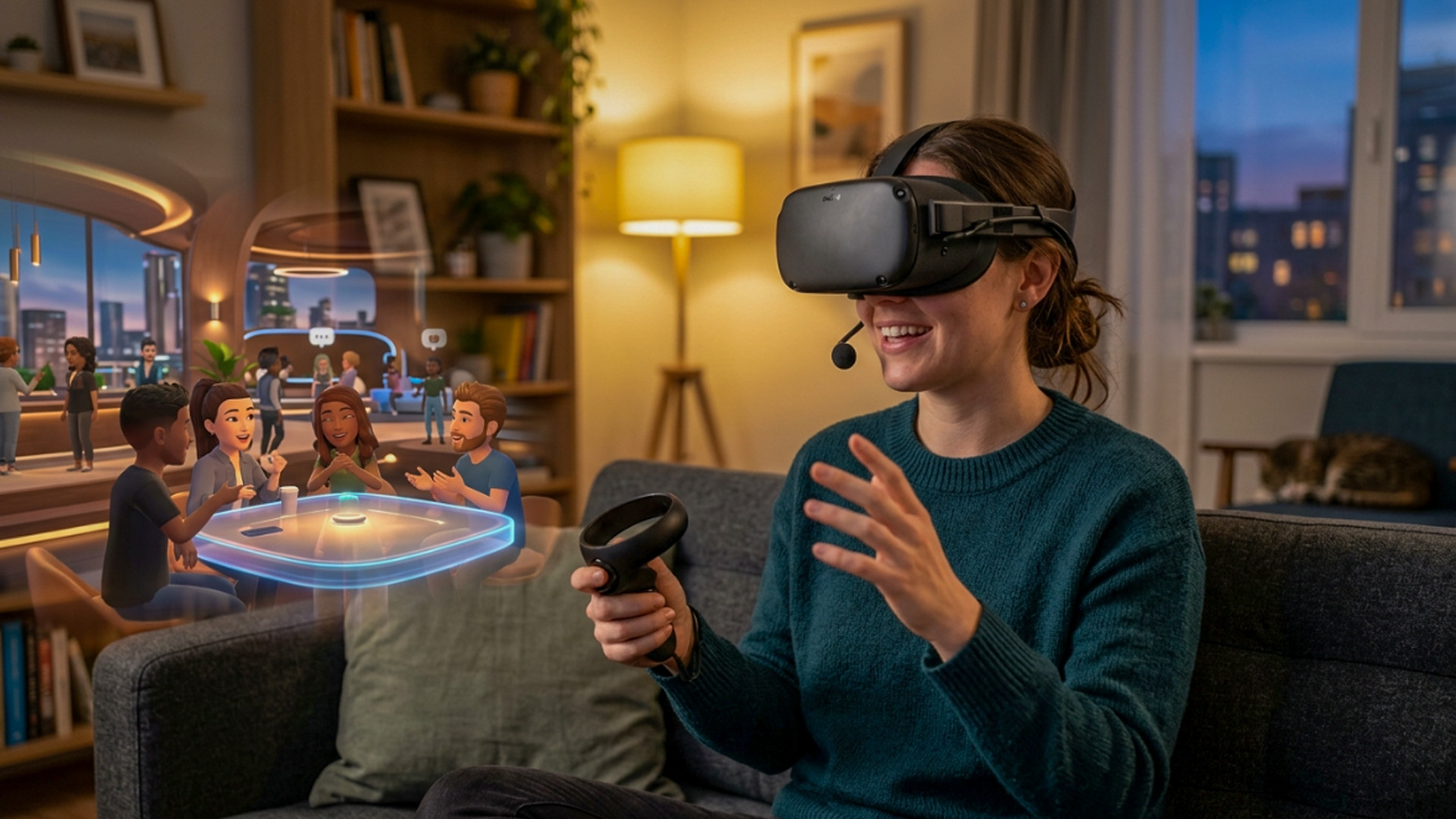
Social VR refers to virtual reality platforms specifically designed around interaction between users inside immersive digital environments. These platforms allow people to enter shared spaces using VR headsets and interact with others through customizable avatars.
Unlike traditional communication platforms that rely on screens and limited interaction systems, Social VR creates environments where users feel physically present inside digital worlds. This creates a stronger emotional connection between users and significantly improves immersion.
Modern Social VR experiences often include realistic voice communication, body movement tracking, interactive environments, multiplayer systems, and social activities that encourage engagement between participants.
The Importance of Presence
One of the defining features of Social VR is the feeling of presence. Presence refers to the psychological sensation of truly being inside a virtual environment instead of simply observing it from outside.
In Social VR environments, users can move naturally, explore digital spaces freely, and communicate with others in ways that feel much more realistic compared to traditional social media or video conferencing platforms.
Spatial audio technology also plays a major role in creating immersion. Voices change naturally depending on positioning and movement within the virtual space, making conversations feel more authentic and believable.
The stronger the feeling of presence, the more emotionally engaging the virtual experience becomes. This is one of the reasons Social VR is attracting attention across so many industries.
Natural Communication in Virtual Spaces
Communication inside Social VR environments feels significantly more interactive than traditional online communication methods.
Instead of typing messages or appearing inside small video call windows, users interact through avatars capable of movement, gestures, and physical interaction within digital spaces. Some advanced systems even include facial expression tracking and hand movement recognition.
These interaction systems help users feel more socially connected because communication becomes visual, spatial, and immersive rather than purely text-based.
As avatar technology continues improving, digital interaction inside virtual spaces is expected to become increasingly realistic.
Social VR in Entertainment
Entertainment is one of the fastest-growing industries adopting Social VR technology. Immersive virtual experiences allow audiences to participate in entertainment rather than simply watching it passively.
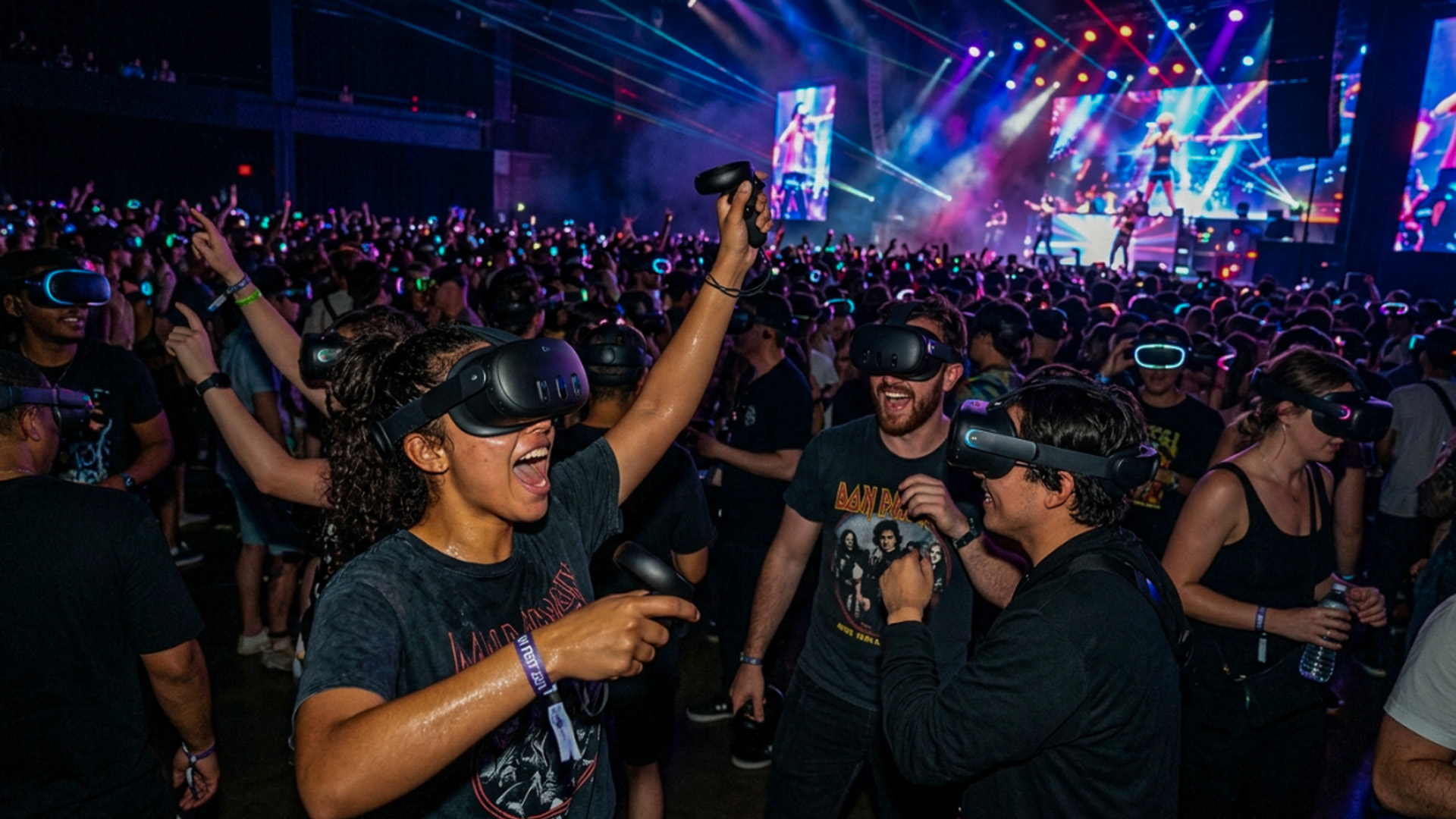
Users can attend concerts, gaming events, live performances, virtual cinemas, and interactive experiences from anywhere in the world. This creates entirely new opportunities for entertainment companies and content creators.
Social VR environments also allow audiences to interact with one another during events, creating digital social experiences that feel more engaging than traditional streaming platforms.
Virtual Concerts and Live Events
Virtual concerts are becoming increasingly popular because they allow artists to reach global audiences without the physical limitations of traditional venues.
Inside Social VR platforms, users can attend immersive performances while interacting with friends and other attendees in real time. Some virtual venues include interactive visual effects, digital stages, customizable environments, and social spaces where users can communicate before and after performances.
These events create experiences that feel much more interactive compared to watching standard livestreams on traditional platforms.
The popularity of virtual concerts continues growing as technology improves and audiences become more comfortable with immersive digital entertainment.
Multiplayer VR Gaming
Gaming has played a major role in the growth of Social VR platforms. Multiplayer VR games create highly immersive social experiences where players can communicate naturally and interact physically inside virtual worlds.
Unlike traditional multiplayer games controlled through keyboards or controllers alone, VR gaming allows players to use natural movement and gestures. This creates gameplay experiences that feel more engaging and realistic.
Many Social VR games also encourage creativity and collaboration by allowing players to build environments, create content, and develop digital communities together.
As VR hardware continues evolving, multiplayer gaming experiences are expected to become even more realistic and socially interactive.
Interactive Digital Communities
Social VR platforms are increasingly becoming large digital communities where users gather around shared interests and experiences.
These virtual communities often include social hubs, creative spaces, gaming environments, collaborative worlds, and interactive events where users spend time together inside immersive digital spaces.
Unlike traditional social media, Social VR encourages active participation rather than passive scrolling. Users become part of the environment itself, which helps strengthen engagement and social connection.
Many people are already forming long-term friendships and communities entirely within virtual reality platforms.
Social VR for Remote Work and Collaboration
Businesses are increasingly exploring Social VR as a new way to improve remote communication and collaboration.
Traditional video conferencing systems often create communication fatigue because interactions feel limited and disconnected. Participants remain separated inside small video windows without any sense of shared physical space.
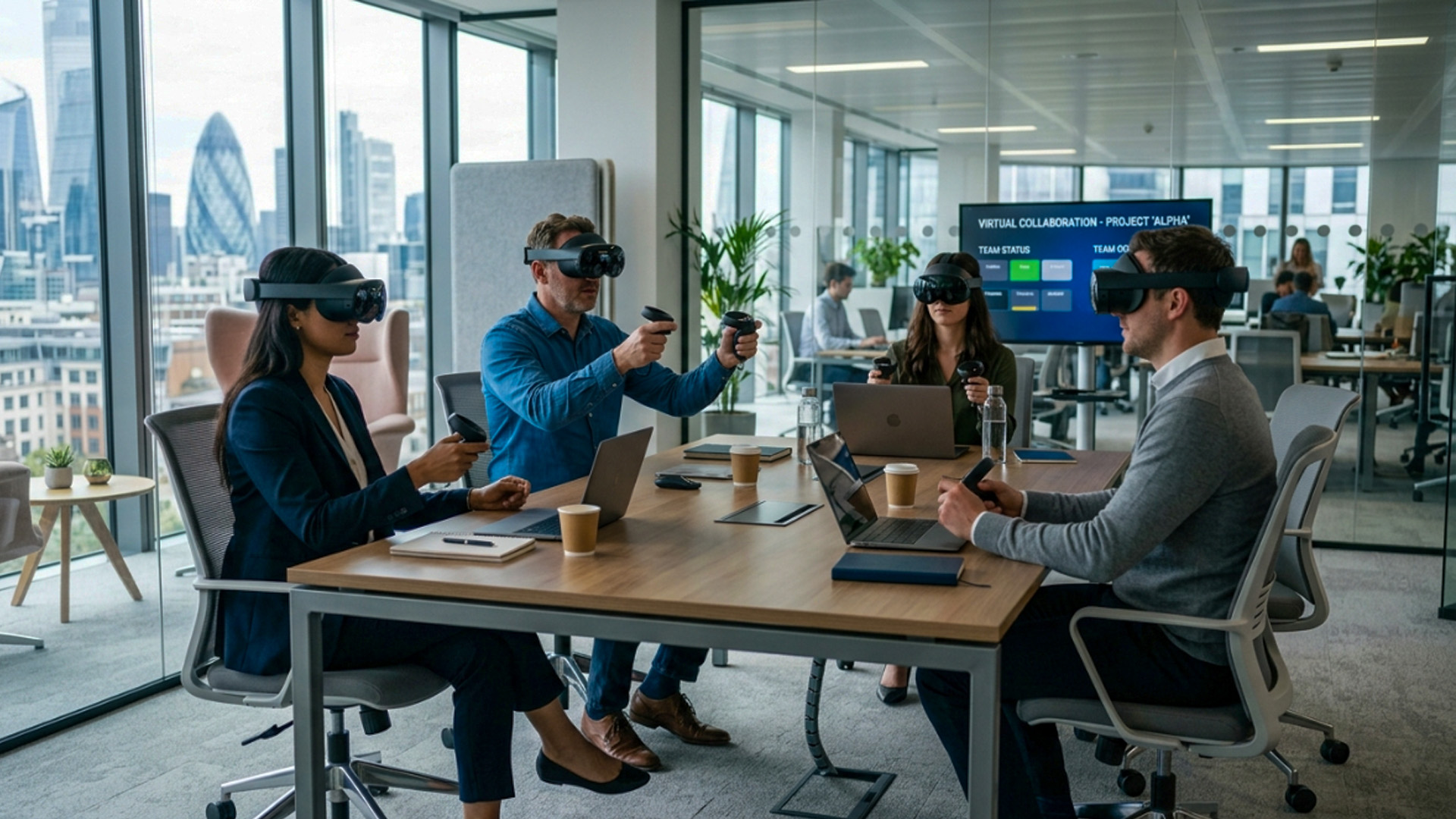
Social VR introduces immersive collaboration environments where users can interact naturally inside shared digital workspaces.
Virtual Meeting Environments
Virtual meeting spaces allow employees, teams, and clients to collaborate inside interactive environments that simulate real-world presence.
Instead of sharing flat presentations through video calls, participants can interact with 3D objects, digital whiteboards, virtual workspaces, and collaborative simulations.
These environments create more engaging meetings because users feel physically connected to the workspace and the people around them.
Businesses are also exploring virtual offices that allow remote teams to maintain stronger collaboration and communication.
Improved Team Engagement
One of the biggest advantages of Social VR collaboration is improved engagement during meetings and group discussions.
Immersive environments help reduce distractions and encourage more active participation because users feel more connected to the digital workspace.
Natural movement and spatial communication also make conversations feel less robotic compared to traditional remote communication platforms.
As remote work continues growing globally, immersive collaboration systems may become increasingly important for businesses seeking more effective communication solutions.
Global Accessibility and Flexibility
Social VR also improves accessibility by allowing people from different countries and regions to collaborate without traveling physically.
Businesses can reduce travel costs while still maintaining highly interactive communication experiences.
This creates opportunities for international collaboration, remote training, global events, and digital teamwork that would otherwise require significant logistical planning.
As internet infrastructure and VR technology improve worldwide, immersive remote collaboration is expected to become more common across industries.
Social VR in Education
Educational institutions are beginning to recognize the value of immersive learning experiences created through Social VR.
Traditional online education systems often struggle with engagement because students consume content passively through screens. Social VR introduces interactive learning environments that encourage participation and collaboration.
Students can explore digital simulations, attend virtual classrooms, and interact with educational content inside three-dimensional spaces.
Immersive Learning Experiences
Immersive learning allows students to experience educational content instead of simply reading or watching information.
For example, students can explore historical environments, interact with scientific simulations, examine complex structures in 3D, and participate in collaborative educational activities.
These experiences improve engagement because learning becomes interactive and visually immersive.
Many educators believe immersive technology can significantly improve information retention and participation.
Collaborative Virtual Classrooms
Social VR classrooms allow teachers and students to communicate naturally inside shared digital environments.
Students can participate in discussions, group projects, simulations, and collaborative activities regardless of their physical location.
Virtual classrooms also create opportunities for international collaboration where students from different countries can learn together inside immersive environments.
As remote education continues evolving, Social VR may become an important part of future digital learning systems.
Increased Student Participation
One of the biggest challenges in online education is maintaining student attention and participation.
Immersive environments help solve this problem by encouraging active interaction rather than passive viewing.
Students become part of the experience itself, which often increases focus, curiosity, and engagement throughout lessons.
Interactive learning environments also make education feel more enjoyable and memorable.

The Technology Behind Social VR
Modern Social VR experiences rely on advanced hardware and software systems working together in real time.
VR headsets, motion tracking systems, networking infrastructure, graphics rendering, and spatial audio technology all contribute to immersive digital experiences.
Continuous technological advancement is making Social VR more realistic, comfortable, and accessible.
VR Headsets and Immersive Displays
VR headsets are the primary devices used to access immersive virtual environments.
Modern headsets feature high-resolution displays, improved refresh rates, wide viewing angles, and accurate motion tracking systems that help create realistic experiences.
Many newer VR devices also support wireless connectivity, making experiences more comfortable and accessible for users.
As hardware technology improves, virtual environments continue becoming visually more realistic and immersive.
Motion Tracking and Interaction Systems
Tracking systems are essential for creating realistic movement inside virtual environments.
Modern Social VR platforms use head tracking, controller tracking, hand recognition, and sometimes full-body tracking systems to improve realism.
These technologies allow users to interact naturally with environments and other participants.
Realistic movement is critical for maintaining immersion and creating believable social interaction.
Real-Time Networking Infrastructure
Social VR requires advanced networking systems capable of supporting large numbers of users simultaneously.
Low latency communication is essential because delays can negatively impact immersion and interaction quality.
As internet infrastructure improves globally, larger and more advanced Social VR environments are becoming possible.
Future developments in cloud computing and networking technology are expected to further improve scalability and realism.

The Future of Social VR
Social VR continues evolving rapidly as immersive technology becomes increasingly mainstream.
Technology companies are investing heavily in virtual environments, avatar systems, AI integration, mixed reality experiences, and digital economies.
Future Social VR experiences are expected to become significantly more realistic, interactive, and socially immersive.
More Realistic Digital Avatars
Future avatar systems will likely include realistic facial expressions, eye tracking, body language simulation, and emotional interaction systems.
These improvements will help digital communication feel much closer to real-world human interaction.
More realistic avatars may also improve emotional connection and communication quality inside virtual spaces.
Integration With Augmented Reality
The future of immersive technology may combine Social VR with augmented reality systems.
Users could interact with both physical and digital environments simultaneously, creating mixed reality experiences that blend virtual content with the real world.
This integration could significantly expand how immersive communication systems are used in business, education, entertainment, and social interaction.
Expanding Digital Economies and Virtual Worlds
Many Social VR platforms already support virtual marketplaces where users can create, buy, and sell digital products and experiences.
As virtual environments continue growing, digital economies are expected to become increasingly important.
Creators, developers, artists, and businesses may continue building entirely new industries inside immersive digital worlds.
The rapid growth of immersive communication technology suggests Social VR could become a major part of how people interact online in the future.
Author: Elisha Roodt
Backed by 25+ years of VR and AR innovation in Johannesburg, sharing practical insights on immersive tech, real-world applications, and industry news across South Africa.