VR’s Impact on Social Interaction and Community Building: How Immersive Worlds Reinvent Human Connection
A Glimpse into the New Social Fabric of Immersive Worlds Picture a bonfire with friends where the flames are pixels and the logs are polygons...
A Glimpse into the New Social Fabric of Immersive Worlds
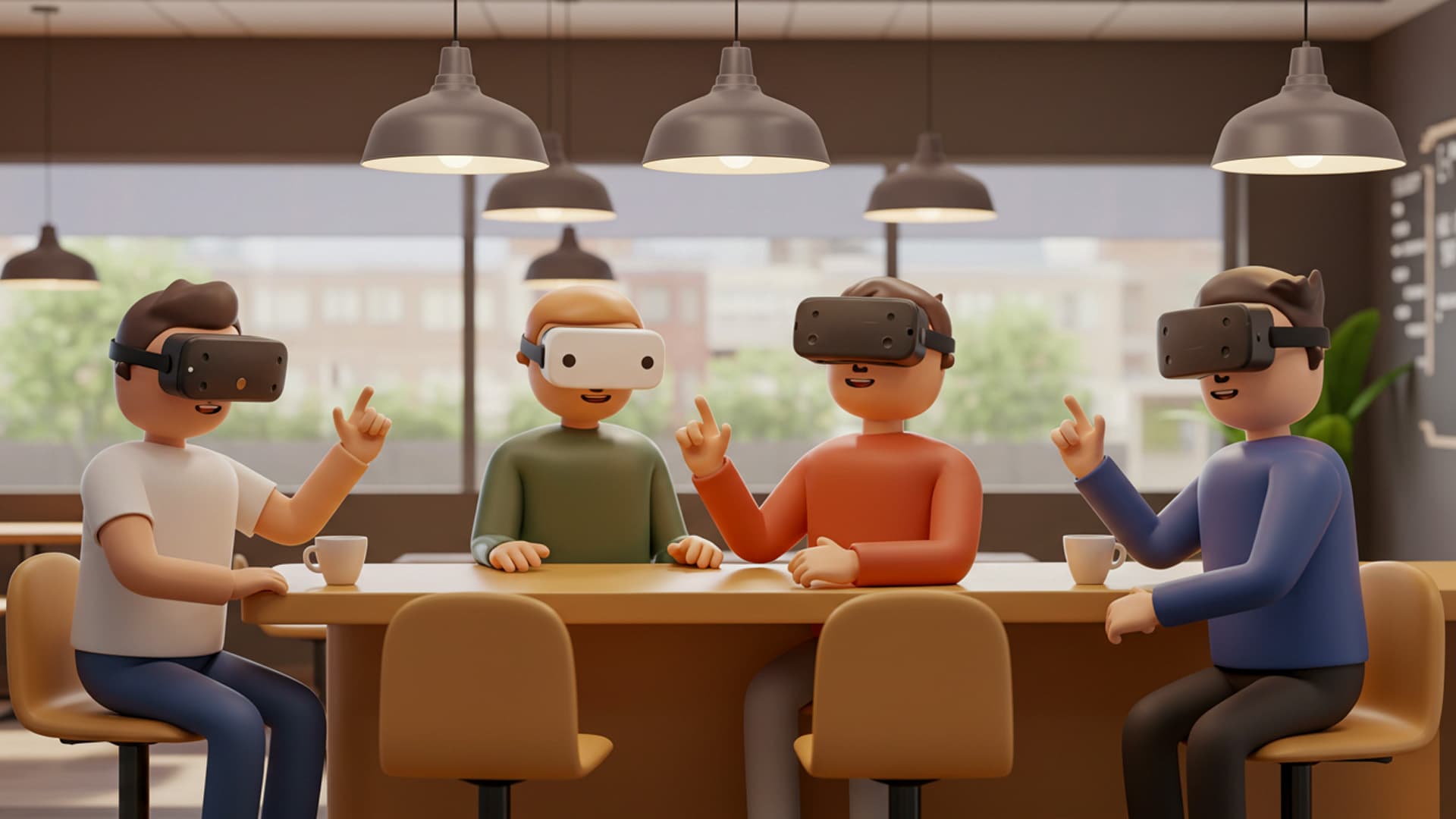
Picture a bonfire with friends where the flames are pixels and the logs are polygons. Voices overlap, bodies gesture, and a shared sense of “here” settles in—even if everyone is physically elsewhere. Virtual reality’s distinctive power is this embodied co-presence: the feeling that other minds occupy your near space. That sensation is now reshaping how we connect, form norms, and convene around causes. From ad-hoc meetups to persistent micro-societies, VR turns timelines into places and comment threads into rooms. What emerges is a social fabric that is more spatial, more expressive, and surprisingly humane when designed well—and deeply volatile when it isn’t.
From Presence to Co-Presence: Rewiring Social Bandwidth
Latency, Synchrony, and the Physics of Rapport
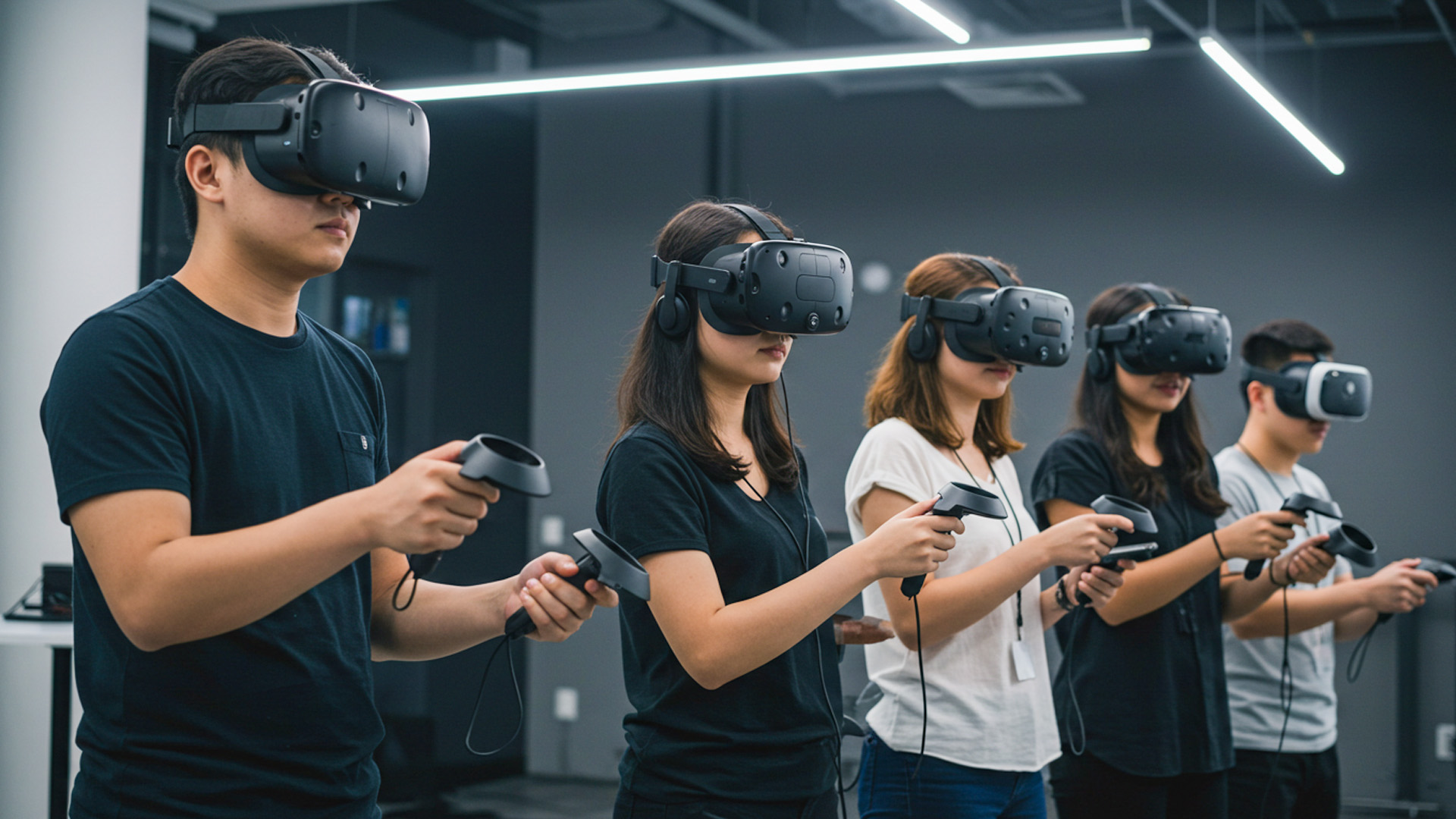
Social connection in VR lives or dies on timing. Milliseconds matter because micro-synchrony—those tiny overlaps of nods, chuckles, and breath—creates rapport. In voice chat, delays are tolerable; in embodied space, a 150 ms lag can feel like conversational sand. Well-tuned platforms prioritize motion prediction, late-latching audio, and clock drift correction so that laughter arrives with the grin and the hand wave lands when it’s intended. Think of it as social physics: latency is friction, jitter is turbulence, and predictable tick rates are smooth asphalt. When the pipeline is tight, participants experience seamless turn-taking, clearer group rhythm, and the subtle trust that comes from moving in time together.
Imagine a design critique with four collaborators sculpting a model in VR. A pointer arcs, a brush sweeps, and the team responds in synchrony. If one user’s gesture shows up late, it scrambles conversational floors: who “has the mic” becomes ambiguous, leading to overtalk or awkward pauses. Engineers mitigate this with client-side interpolation for head and hand rigs, decimation of low-salience updates, and adaptive voice encoding tied to local motion energy. The result is a perceived increase in affective bandwidth: participants feel each other’s timing and intent, not just their words. This coherence is the bedrock of the “we” feeling that text channels rarely sustain.
Embodied Signals: Avatars, Gaze, and Micro-gestures
Presence becomes social when bodies communicate. Even stylized avatars broadcast cues: gaze direction, head pitch, shoulder openness, hand pose. These signals carry infrahuman data—interest, deference, playfulness—that language alone can’t convey. Eye-tracking elevates this from pantomime to nuance, enabling turn-yielding glances and subtle acknowledgment without interrupting. Haptics and controller rumble, while crude, add a proprioceptive overlay that makes a pat on the back or a fist bump legible. Designers borrow from proxemics—social distances like intimate, personal, and social zones—to shape defaults: spawn points that avoid face violations, gaze-responsive nameplates, and emote systems mapped to believable kinetics rather than canned, floaty loops.
Consider a language exchange café in VR. Two partners practice, shifting from cautious small talk to lively storytelling. The avatar’s eye darts, hands flutter, and shoulders relax; these cues scaffold confidence. A well-instrumented system streams head and wrist quaternions, fuses with gaze rays, and resolves to intentional pointing, not jitter. A lightweight IK solver preserves balance and avoids “rubber arms,” preventing uncanny dips that can break trust. Because micro-gestures synchronize with voice prosody, learners mirror each other’s cadence, accelerating rapport. The interface vanishes, and what remains is the human choreography of attention, enacted through polygons yet perceived as unmistakably real.
Shared Context: Spatial Audio and Environmental Cues
Communities need context, and VR supplies it spatially. Spatial audio defines conversational neighborhoods: step toward a cluster, voices bloom; drift away, they fade. Acoustic occlusion creates micro-privacy behind a pillar, while reverb hints at room size and materiality. Environmental cues—whiteboards, props, lighting—signal purpose without modal menus. A softly lit amphitheater invites talks; a workshop with tools invites tinkering. These diegetic affordances reduce cognitive overhead, letting groups coordinate implicitly. The world itself becomes a facilitator, nudging norms: queue up here, whisper there, collaborate at that table. Unlike feeds, rooms make context perceivable, compressing setup time and lowering social friction.
Picture a volunteer hack night. Teams form around tables with different toolkits: shader station, audio booth, narrative lab. Spatial audio softly isolates each cell, yet allows easy crossover. A glowing “help desk” beacon pulses when mentors are free. These cues are ambient, not bossy. Participants read the room like a map of opportunities, falling into coordination without ping storms. Design teams increasingly script such spaces using rule-based logic: if group density spikes, spawn another table; if voice overlap exceeds a threshold, widen spatial falloff. The outcome is emergent order—no rigid schedule, just a world whose physics encourage productive, respectful togetherness.

New Commons: Building and Governing VR Communities
World-as-Forum: Architecture as Social Contract
In VR, the “forum” is literal: architecture encodes the social contract. A narrow hallway throttles crowds into polite turn-taking; a circular hearth equalizes attention; a raised dais concentrates authority. Community builders wield layout like policy. They design spawn vectors to diffuse clumping, place entry vestibules for onboarding, and integrate visible norms—like consent panels or content ratings—into the approach path. The world’s topology pre-moderates behavior by making good choices obvious and bad ones inconvenient. This is less censorship than choreography: reduce pathologies through friction, amplify prosocial rituals with convenience, and let members feel that the space shares their values.
Imagine a civic town hall in VR addressing transit. Citizens enter through a vestibule displaying rules of engagement, then choose tables marked debate, design, or data. Each table affords its function: debate has turn timers and mic tokens; design has sticky notes that cluster; data has live dashboards. The room’s back wall shows a queue of proposals, advancing visibly. When a discussion escalates, proximity gates widen and spatial audio clarity increases for facilitators. Through these architectural semantics, the space guides conduct without hectoring. People behave better because the world itself makes constructive participation feel natural, even gratifying.
Civic Protocols: Moderation, Safety, and Trust
Moderation in VR extends beyond text filters. It involves perception management: shrinking disruptive avatars, soft-muting proximity, or fading offenders into spectral silhouettes that can’t invade personal space. Safety bubbles enforce proxemic boundaries; haptic nulling prevents unwanted touch from registering. Identity can be tiered: pseudonymous by default, attestable when required, revocable if abused. Evidence capture becomes multimodal: short buffers of spatial audio and pose streams preserve context for review. These civic protocols, implemented as world rules, distribute power between hosts, moderators, and peers, making enforcement legible and appealable—key ingredients for durable, legitimate governance in virtual commons.
Consider a music venue community. A first-time attendee triggers a gentle onboarding: how to emote, how to yield space near the stage, how to report issues. If harassment occurs, the target can instantly invoke a “phase shift” that renders aggressors translucent and non-collidable. Meanwhile, a rolling, encrypted buffer captures the previous 30 seconds of audio and pose vectors, shareable with moderators upon consent. Repeat violators see their avatar capabilities progressively constrained—no handheld props, reduced volume cone—before temporary bans. Because remedies are progressive and visible, trust grows: rules are not arbitrary; they are stabilizers that protect the vibe everyone came for.
Rituals and Reputation: Earning Belonging
Communities aren’t only guarded; they are cultivated through rituals. VR excels at lightweight rites of passage—first build night, open mic, garden tending—that convert visitors into stakeholders. Reputation can be portable yet contextual: badges reflect contribution types (mentor, host, builder) and decay if not renewed through action. Instead of gamified points divorced from meaning, think capability unlocks: access to backstage tools, permission to host rooms, or the ability to clone templates. These privileges, bound to demonstrated care, create a meritocratic gravity. People stay because the space acknowledges their labor and entrusts them with stewardship.
Envision a community makerspace where newcomers learn to script world logic. After three guided sessions, they earn a “scene artisan” role that allows them to publish modules into the commons library. Mentors can “co-sign” contributions, boosting their discoverability. Seasonal festivals showcase top builds, and participants parade with ephemeral laurels that fade unless they continue mentoring. This isn’t grindy; it’s rhythmic. Reputation breathes with the community’s pulse, rewarding sustained engagement. By tying recognition to visible affordances rather than abstract scores, VR communities transform social capital into practical capability—a feedback loop where contribution literally reshapes the world.
Identity, Anonymity, and the Multiplex Self
Embodiment and Proteus Effects
VR makes identity plastic. The “Proteus effect” describes how avatar form influences behavior: embody a towering figure and you may negotiate more assertively; adopt a friendly, rounded design and you may soften. Designers can wield this ethically, offering avatar kits that encourage approachability in social hubs and gravitas in formal convenings. Embodiment becomes a tool for perspective-taking as well—walk a mile in someone else’s gait. Yet with great plasticity comes risk: hyper-sexualized or intimidating forms can destabilize safety. The design challenge is to balance self-expression with community comfort through form factors, dress codes, and capability constraints contextual to the venue.
Imagine a restorative justice circle in VR where disputants meet with trained facilitators. Everyone adopts a neutral, softly animated avatar pre-agreed to reduce power cues. Subtle customization—accessories, color accents—preserves selfhood without signaling dominance. The room mirrors a campfire clearing; chairs anchor attention, and spatial audio privileges the current speaker. Over time, participants report that the combination of embodiment and environmental calm lowers defensiveness. They speak more candidly and listen more generously. The avatar doesn’t erase identity; it reframes it, enabling a new angle of empathy. In this way, embodiment becomes a prosthesis for perspective, not a mask for evasion.
Interoperable Identity: Wallets, Badges, and Graphs
As VR venues proliferate, identity becomes a routing problem. People want selective portability: carry reputation and purchases where appropriate without dragging everything everywhere. Cryptographic wallets, verifiable credentials, and signed attestations offer a pragmatic path. A poetry slam badge might unlock open-mic priority across arts venues; a “safe host” credential might permit room creation platform-wide. Crucially, graphs should be multiplex: work friends, guild mates, family—distinct clusters with controllable bleed. Privacy-preserving proofs can verify “is over 18” without disclosure. The goal isn’t a monolithic identity but a toolkit for contextual selves that travel gracefully across worlds.
Consider a teacher who runs VR field trips. Their wallet holds credentials: certified educator, safeguarding trained, museum partner. When they arrive in a historical simulation, the venue verifies these proofs and grants classroom controls—pause world time, highlight artifacts, mute global chatter. Students carry temporary field-trip passes scoped to the event and expiring at session end. Afterward, the teacher exports a participation record to a learning system without revealing students’ personal graphs. This arrangement balances accountability with privacy, enabling mobility without surveillance creep. Interoperable identity, done right, feels like a set of keys you choose to carry, not a passport demanded everywhere.
Harms, Consent, and Psychosocial Load
Embodied interaction raises new harm vectors: proximity violations, mimed assault, overwhelming crowds, or parasocial entanglements amplified by presence. Consent tooling must be proximal and legible: opt-in hugs, one-tap safety bubbles, and default personal space that dynamically adapts to density. Interfaces should visualize who can hear or see you, reducing the stress of invisible audiences. Session health metrics—like motion comfort, social energy, and noise exposure—can inform gentle nudges: take a breather, dim the world, or rebalance audio. When platforms respect physiological limits and psychosocial load, people return. Safety is not merely the absence of harm; it’s the presence of care.
Imagine a newcomer at a bustling VR expo. A comfort HUD shows their current load indicators; as noise spikes, the system narrows their audio cone and softens reverb. Approaching strangers must “knock” before entering personal zones, and the user can accept with a gesture. If anxiety rises, a quick “phase shift” blurs the crowd and highlights exits. Importantly, these controls are framed as empowerment, not fragility. After a short break in a quiet garden instance, the user reenters. They remember the expo not as a barrage but as navigable. Consent tooling, thoughtfully surfaced, transforms overwhelming into manageable, enabling sustainable participation.
Hybrid Sociality: VR, 2D Screens, and the Real-World Mesh
Cross-device Continuity and Accessibility
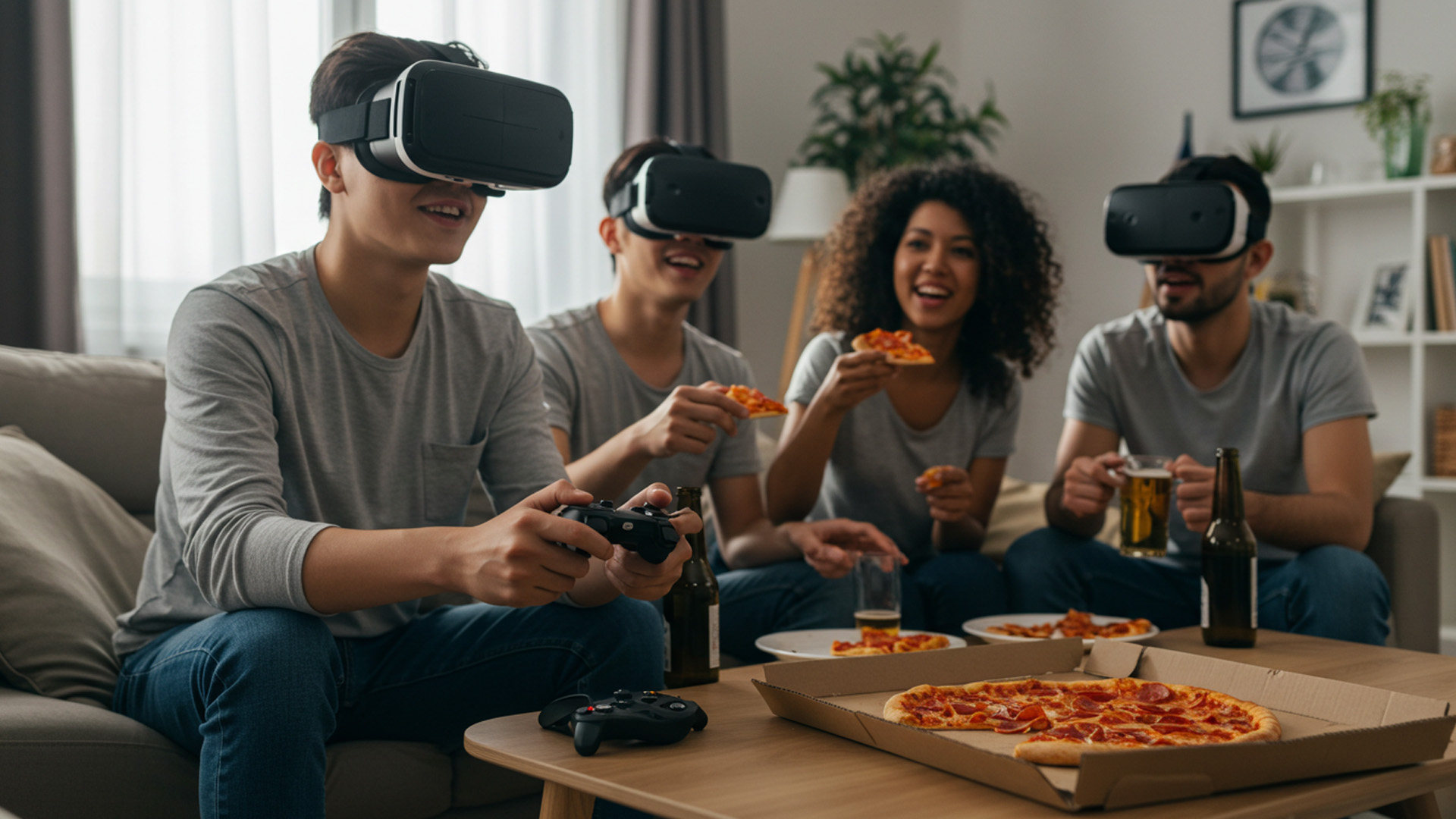
Communities thrive when participation spans contexts. Not everyone can don a headset every night; phones and laptops remain vital. Cross-device continuity treats VR as a high-fidelity node in a broader mesh, not a walled garden. A meeting can begin on 2D, crescendo in VR for whiteboarding, then resolve back to mobile for follow-ups. Presence gradients communicate capability: avatars in VR, tiles on desktop, dots on mobile—each with appropriate affordances. Accessibility is not an afterthought but a principle: captions, hand-free controls, adjustable contrast, and alternative input schemes ensure that embodied spaces welcome the full spectrum of bodies and bandwidths.
Picture a community planning workshop. The agenda lives on the web; tasks synchronize to a shared board. During the design sprint, headset users manipulate 3D parcels while 2D participants annotate and vote. A latecomer joins by phone, listening with captions and using voice to contribute. The system reflects roles clearly: VR users move volumes; 2D users tag and sort; mobile users prioritize. Artifacts persist across modes, so decisions don’t evaporate with the headset. This composability widens the funnel: people show up in the way that fits their moment, and the community remains cohesive because continuity is engineered, not assumed.
Economies of Participation: Timebanks and Creator Tools
Healthy communities recognize that attention and labor are scarce. VR platforms can support economies that valorize contribution without extracting it. Timebanks let members trade facilitation hours for build help; patronage models fund world hosts; micro-grants seed experimental venues. Creator tools lower the friction of contribution: in-world programming, parametric templates, and remixable assets turn more members into makers. Importantly, fees and revenue shares should be transparent and modest to avoid feudal dynamics. When the cost of world-running is predictable and the upside of care work is visible, communities mature from volunteerism into sustainable stewardship.
Imagine a neighborhood theater world. Hosts schedule weekly performances, builders maintain the set, and ushers guide newcomers. A shared timebank converts an hour of ushering into credits redeemable for stage tech assistance or rehearsal time. Audience tips flow into a treasury, transparently allocated to asset licenses and server costs. A simple in-world editor lets performers script lighting cues without leaving the venue. Over months, the theater becomes a fixture—not because a platform subsidized it, but because tools and norms made reciprocity legible. This is the civic economy of VR: small, local, relational, and surprisingly robust.
Design Patterns for Serendipity
The best communities leave room for the unplanned. Serendipity in VR is architectural: porous boundaries between rooms, vista lines that encourage curiosity, and discovery surfaces that favor friends-of-friends over global virality. Lightweight “peek” modes let you glance into a venue without committing. Soft invitations—hand waves, emote echoes—replace intrusive pings. Crucially, movement costs are calibrated: one click to roam nearby, a small ritual to enter intimate spaces. Designers can also use temporal rhythms—office hours, pop-up salons, seasonal festivals—to create predictable chances for chance encounters. Serendipity isn’t chaos; it’s permission for delightful detours.
On a quiet Tuesday, you wander a cultural district. A street musician’s melody spills into the square; your HUD shows that two friends are nearby, “idle and open.” You step into a gallery where frames show live thumbnails of rooms in progress—coding jams, cooking classes, lyric circles. A curator waves; your avatar mirrors the gesture, and you join a micro-tour. None of this felt like a notification storm. It felt like strolling a city that respects your attention while inviting you to play. That’s the magic trick: engineering environments where discovery feels organic and consentful, not algorithmically pushy.
Hybrid Sociality
Author: Elisha Roodt
Backed by 25+ years of VR and AR innovation in Johannesburg, sharing practical insights on immersive tech, real-world applications, and industry news across South Africa.