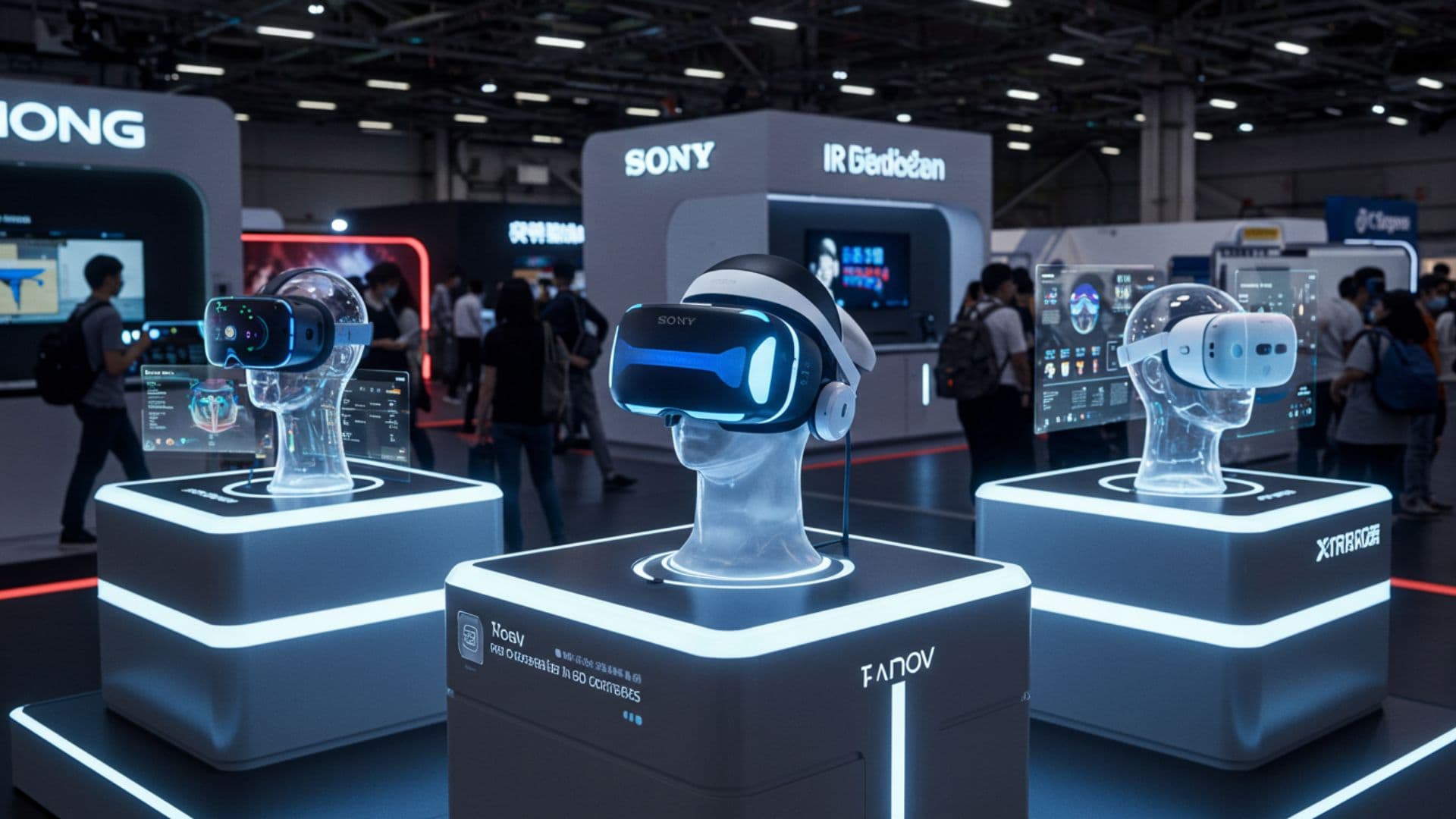
Top VR Developments of Early 2025
Discover the Transformative Shifts in the VR Landscape Shaping 2025 As of early 2025, the virtual reality (VR) landscape is undergoing significant...
Discover the Transformative Shifts in the VR Landscape Shaping 2025
As of early 2025, the virtual reality (VR) landscape is undergoing significant advancements and industry shifts, signaling a new era of immersive technology. Major players like Sony, Vivo, Google, Samsung, and Meta are unveiling groundbreaking devices and collaborations that promise to redefine how we interact with digital environments. From Sony's innovative Xyn headset to Meta's visionary AI-driven augmented reality glasses, these developments are set to enhance creative workflows, elevate user experiences, and intensify competition within the market. However, alongside these advancements, the industry faces challenges related to market adoption and technological integration, highlighting the dynamic and evolving nature of VR technology.
Sony's Xyn Headset Prototype
Design and Features
Sony has recently introduced the Xyn (pronounced "zin"), an "extended reality" headset specifically designed for creators in the 3D content space, including films, animation, and games. The Xyn boasts state-of-the-art 4K OLED displays that deliver stunning visual fidelity, ensuring that every detail in virtual environments is rendered with remarkable clarity. Additionally, the headset features advanced video passthrough capabilities, allowing users to seamlessly integrate real-world elements into their virtual workflows. This blend of high-resolution displays and real-time video integration positions the Xyn as a versatile tool for professionals seeking to push the boundaries of their creative projects.
The ergonomic design of the Xyn ensures comfort during extended use, with adjustable straps and lightweight materials that reduce fatigue. Sony has also prioritized compatibility, ensuring that the headset works seamlessly with a variety of third-party design and production software. This open ecosystem approach allows creators to incorporate the Xyn into their existing workflows without significant adjustments. Moreover, the integration of wireless connectivity options enhances mobility, enabling users to work in diverse environments without being tethered to a stationary setup.
Software Integration
Complementing the hardware, Sony unveiled the Xyn Motion Studio, a Windows-based application designed to support up to 12 Mocopi sensors for wireless motion tracking. This sophisticated motion tracking system captures nuanced movements with high precision, translating them into real-time animations within the virtual environment. The Motion Studio also includes robust motion-editing features, allowing creators to refine and manipulate motion data effortlessly. This level of control ensures that animations are both lifelike and expressive, catering to the nuanced demands of high-end content creation.
The Xyn Motion Studio's compatibility with various design and production tools further enhances its utility. Whether integrating with industry-standard software like Autodesk Maya or Adobe After Effects, the Xyn provides a seamless bridge between physical motion capture and digital animation. This interoperability not only streamlines the production process but also fosters greater creativity by allowing artists to experiment with different tools and techniques. As a result, the Xyn headset and Motion Studio together offer a comprehensive solution for creators looking to innovate in the VR space.
Market Impact and Future Prospects
While Sony has yet to announce pricing or availability details for the Xyn headset, the introduction of such a high-spec device underscores the company's commitment to advancing VR technology for professional use. The Xyn's advanced features position it as a competitive option in the creator-focused VR market, potentially attracting a niche audience of filmmakers, animators, and game developers seeking cutting-edge tools. By targeting the professional sector, Sony differentiates the Xyn from consumer-oriented VR headsets, carving out a distinct space within the broader VR ecosystem.
Looking ahead, the release of the Xyn Motion Studio software in late March 2025 is anticipated to bolster the headset's appeal, offering creators a robust platform for motion capture and animation. As Sony continues to refine and expand the Xyn's capabilities, the headset is expected to influence the standards for VR tools in content creation. Additionally, partnerships with leading software developers could further enhance the Xyn's functionality, integrating new features and expanding its compatibility. This forward-looking approach ensures that the Xyn remains at the forefront of VR innovation, driving the next wave of creative possibilities.

Vivo's Entry into Mixed Reality
Product Development and Features
Chinese tech giant Vivo is making a significant entry into the mixed reality (MR) market with the development of a new MR headset designed to compete with established devices like Apple's Vision Pro. Officially confirmed through a teaser, Vivo's MR headset is slated for launch in the third quarter of 2025. Preliminary tests suggest that Vivo's device may offer superior performance compared to existing competitors, with enhanced display technologies and more intuitive user interfaces. The headset is expected to feature high-resolution displays, advanced spatial audio, and seamless integration with Vivo's extensive ecosystem of smartphones and smart devices.
Vivo's MR headset is also likely to incorporate cutting-edge sensors and tracking technologies, enabling precise hand and eye tracking for more natural interactions within virtual environments. These features aim to provide users with an immersive experience that blends digital content seamlessly with the real world. Additionally, Vivo is focusing on lightweight materials and ergonomic design to ensure comfort during prolonged use, addressing one of the common challenges faced by MR headset users.
Competitive Positioning and Strategy
Vivo's strategic entry into the MR market is poised to intensify competition, particularly against dominant players like Apple and Meta. By leveraging its strong presence in the smartphone market and its expertise in consumer electronics, Vivo can offer a compelling value proposition that combines high performance with competitive pricing. The company's focus on delivering a superior user experience through advanced technology and user-friendly design is expected to resonate with both early adopters and mainstream consumers.
Furthermore, Vivo's commitment to fostering an open ecosystem for MR content creation and distribution could enhance the headset's appeal. By supporting a wide range of applications and encouraging third-party developers to create content, Vivo aims to build a robust and diverse MR ecosystem. This approach not only attracts developers but also ensures that users have access to a wide array of applications, from productivity tools to entertainment and educational content. As Vivo establishes its presence in the MR market, its competitive strategies are likely to drive innovation and push the boundaries of what MR technology can achieve.
Market Impact and Future Prospects
Vivo's entry into the MR space is expected to have a significant impact on market dynamics, particularly in regions where Vivo already has a strong foothold. The company's reputation for delivering high-quality consumer electronics at competitive prices positions its MR headset as an attractive option for cost-conscious consumers seeking advanced mixed reality experiences. Additionally, Vivo's global distribution network and marketing prowess will likely facilitate widespread adoption, expanding the reach of MR technology to new markets.
Looking forward, Vivo's MR headset could set new standards for affordability and accessibility in the mixed reality market. By balancing advanced features with competitive pricing, Vivo aims to make MR technology more accessible to a broader audience, thereby accelerating the adoption of mixed reality applications in everyday life. Moreover, ongoing investments in research and development are expected to drive continuous improvements in the headset's performance and functionality, ensuring that Vivo remains a key player in the evolving MR landscape. As Vivo continues to innovate, its MR headset is poised to become a cornerstone of the company's product portfolio, shaping the future of mixed reality experiences.

Google and Samsung's Collaboration
Project Moohan: Vision and Objectives
In a strategic move to challenge existing products like Meta's Ray-Ban smart glasses and Apple's Vision Pro, Google is partnering with Samsung to introduce new smart glasses and VR headsets under the initiative known as "Project Moohan." This collaboration aims to leverage Google's expertise in software and artificial intelligence (AI) with Samsung's prowess in hardware development and manufacturing. The joint venture seeks to create devices that offer high-end features at a more accessible price point, positioning them as formidable contenders in the extended reality (XR) market.
Project Moohan's vision revolves around creating seamless and intuitive XR devices that enhance user interactions through advanced AI-driven functionalities. By integrating Google's AI capabilities, the new devices are expected to offer more natural and conversational user interactions, making the XR experience more immersive and user-friendly. Samsung's contribution to the hardware design ensures that the devices are not only powerful but also stylish and comfortable, catering to the aesthetic and functional demands of modern consumers.
Technological Innovations and Features
The upcoming smart glasses and VR headsets under Project Moohan are set to feature a customized version of Google's Android operating system, specifically tailored for extended reality applications. This specialized OS will provide a robust platform for running a wide range of XR applications, from productivity tools to immersive gaming and virtual collaboration environments. The integration of Android allows for a vast ecosystem of apps and services, enhancing the versatility and utility of the devices.
Samsung's hardware expertise will contribute to the development of high-resolution displays, advanced sensors, and efficient power management systems, ensuring that the devices deliver superior performance and extended battery life. Additionally, the collaboration is likely to incorporate cutting-edge connectivity options, such as 5G and Wi-Fi 6E, to support high-speed data transfer and low-latency interactions, which are crucial for a seamless XR experience. These technological innovations position Project Moohan's devices as highly competitive options that offer both performance and affordability.
Market Impact and Future Prospects
Google and Samsung's collaboration through Project Moohan is expected to significantly influence the XR market by introducing high-quality devices at a more competitive price range. By offering advanced features and robust performance at a lower price point than competitors like Apple's Vision Pro, Project Moohan aims to attract a wider audience, including both early adopters and mainstream consumers. This strategy not only increases market penetration but also encourages broader adoption of XR technologies in various sectors, including education, healthcare, and enterprise applications.
Looking ahead, the success of Project Moohan will depend on the seamless integration of hardware and software, as well as the ability to deliver compelling XR experiences that meet the diverse needs of users. Continued collaboration between Google and Samsung is expected to drive ongoing innovation, with future iterations of the devices incorporating even more advanced features and functionalities. Additionally, strategic partnerships with content creators and developers will be crucial in building a vibrant ecosystem around the devices, ensuring that users have access to a wide array of applications and services. As Project Moohan progresses, it has the potential to redefine the standards for XR devices, fostering a new wave of innovation and competition in the extended reality market.
Meta's Vision for an AI-Driven Future
Orion Smart Glasses: The Next Evolution
Meta's Chief Technology Officer, Andrew Bosworth, has articulated a bold vision for the future of augmented reality (AR) through the development of the Orion smart glasses. These augmented reality glasses are envisioned to replace traditional smartphones, offering a more immersive and interactive experience through advanced hand and eye tracking supported by a neural interface. The Orion glasses have been in development for over a decade, reflecting Meta's long-term commitment to pioneering AR technology. These glasses are designed to seamlessly integrate digital content into the real world, allowing users to interact with virtual objects and information as if they were part of their physical environment.
The Orion smart glasses are expected to feature cutting-edge displays that project high-resolution images directly into the user's field of view, providing a clear and vibrant augmented reality experience. The neural interface technology will enable users to control the glasses through subtle hand gestures and eye movements, eliminating the need for physical controllers and making interactions more intuitive and natural. This level of control is anticipated to enhance user engagement and make the AR experience more fluid and responsive, bridging the gap between the digital and physical worlds.
AI Integration and User Experience
Central to Meta's vision is the integration of artificial intelligence (AI) to drive the functionality and user experience of the Orion smart glasses. AI advancements will enable the glasses to understand and anticipate user needs, providing personalized and context-aware information and assistance. For example, the glasses could offer real-time translations of foreign languages, provide navigation assistance, or suggest relevant information based on the user's current activities and environment. This intelligent assistance aims to make the AR experience more seamless and useful, enhancing productivity and convenience in everyday tasks.
Moreover, AI-powered features will facilitate more natural and conversational interactions with the glasses. Users will be able to engage in voice-activated commands and receive intelligent responses, creating a more engaging and interactive experience. The neural interface will further enhance this by allowing the glasses to learn from user behavior and preferences, continuously improving the accuracy and relevance of the AI-driven functionalities. This deep integration of AI is expected to make the Orion smart glasses not just a tool, but an essential companion that adapts to and enhances the user's daily life.
Long-Term Impact and Future Developments
Meta's ambition to replace traditional smartphones with the Orion smart glasses signifies a transformative shift in how we interact with technology. If successful, this innovation could lead to the obsolescence of physical screens, as users rely on augmented reality to access information, communicate, and perform tasks. The potential applications of the Orion glasses extend beyond personal use, impacting industries such as healthcare, education, and manufacturing by providing enhanced tools for visualization, training, and remote collaboration.
Looking ahead, Meta plans to continue refining the Orion smart glasses, incorporating feedback from early adopters and advancing the underlying technologies. Future developments may include enhanced battery life, more compact and stylish designs, and expanded AI capabilities that further personalize and enrich the user experience. Additionally, Meta is likely to explore partnerships with developers and content creators to build a robust ecosystem of applications and services tailored to the Orion platform. This ongoing innovation and collaboration will be crucial in realizing Meta's vision of an AI-driven future, where augmented reality becomes an integral part of daily life, seamlessly blending the digital and physical realms.

Frequently Asked Questions
When will these VR and MR devices be available to consumers?
Each device has its own release schedule, with most set to launch throughout 2025. Specific release dates are subject to change based on development progress and platform availability. It's recommended to follow the official channels of each company for the most accurate and up-to-date information.
Are these VR and MR devices compatible with multiple platforms?
Yes, all the mentioned devices are being developed with cross-platform compatibility in mind. They will be available on major consoles, PCs, and select VR platforms where applicable. This ensures that a wide range of users can access and enjoy the devices regardless of their preferred gaming or computing system.
Will there be multiplayer or collaborative features?
Most of these devices incorporate multiplayer and collaborative features to enhance the user experience. Sony's Xyn and Vivo's MR headset focus on creative collaboration, while Google and Samsung's Project Moohan aim to support interactive and social XR experiences. Meta's Orion smart glasses are designed to facilitate immersive and interactive engagements, fostering a sense of community and connectivity among users.
What are the system requirements for these VR and MR devices?
System requirements vary depending on the device and the platform. Generally, modern consoles and PCs with up-to-date hardware will provide the best experience. For VR and MR headsets, a compatible GPU, sufficient RAM, and storage are typically necessary. Detailed system requirements will be available closer to each device's release date.
Are there any special editions or pre-order bonuses available?
Several of the upcoming devices offer special editions and pre-order bonuses, including exclusive in-device features, early access to software, and collectible items. These offers are typically announced through official websites and tech news outlets, so keeping an eye on these sources is advisable for interested consumers.
How can I stay updated on these VR and MR developments?
Staying updated is easy by following the official social media channels, websites, and newsletters of each company. Additionally, tech platforms like TechCrunch, The Verge, and Wired provide updates and notifications for upcoming releases. Engaging with tech communities and forums can also provide timely information and insights.
Will there be post-launch support and updates for these devices?
Yes, the developers have committed to providing post-launch support, including firmware updates, software patches, and additional features. This support ensures that the devices remain up-to-date with the latest advancements, addressing any issues that may arise and expanding functionality to enhance the overall user experience.
Can I expect downloadable content (DLC) or additional applications?
Downloadable content and additional applications are planned for several of these devices, offering new features, enhancements, and specialized tools that extend the capabilities of the VR and MR ecosystems. DLCs are typically released periodically, allowing users to continue enjoying new content and functionalities well beyond the initial launch.
Are there any planned expansions or future iterations of these devices?
Given the anticipated popularity and technological advancements, there are discussions and plans for potential expansions and future iterations of these devices. These expansions aim to build upon the existing functionalities and introduce new features that keep the devices competitive and aligned with evolving user needs and technological trends.
How do these VR and MR devices utilize emerging technologies?
These upcoming devices leverage cutting-edge technologies such as advanced AI, virtual reality, mixed reality, and high-fidelity graphics to deliver immersive and innovative experiences. From Sony's lifelike extended reality simulations in the Xyn headset to Meta's AI-driven augmented reality interactions in the Orion smart glasses, each device incorporates modern technological advancements to enhance functionality, user interaction, and overall experience.
Author: Gerald Ferreira
Backed by 25+ years of VR and AR innovation in Johannesburg, sharing practical insights on immersive tech, real-world applications, and industry news across South Africa.