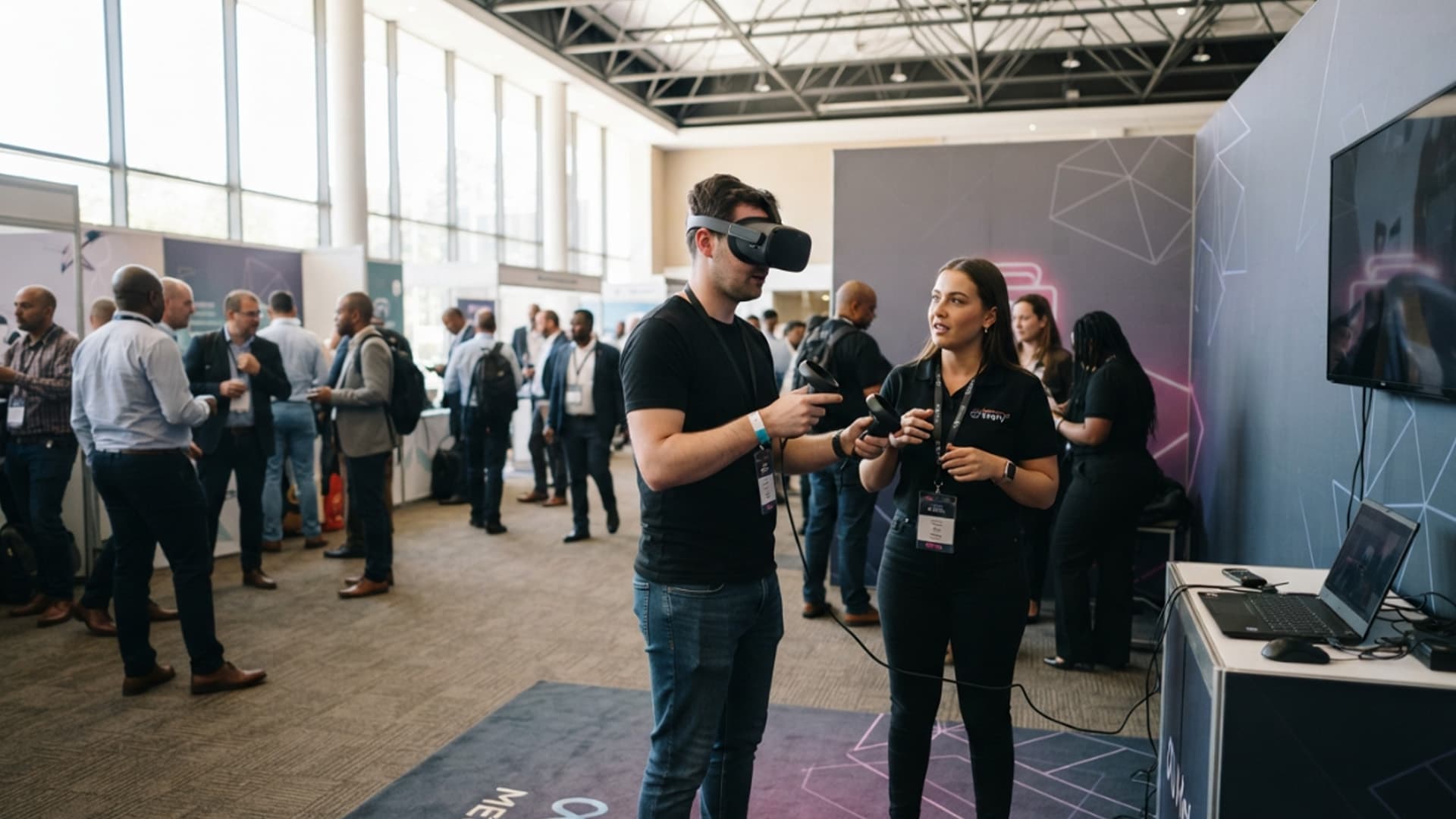
VR Events in 2026: Creating Experiences People Remember
Virtual reality is helping event organisers create more engaging brand activations, training experiences and interactive moments that give attendees a reason to stop, participate and share.
VR Events in 2026: Creating Experiences People Remember
Events compete for attention. Whether the setting is a product launch, exhibition, conference, festival, corporate gathering or public activation, attendees are surrounded by stands, screens, conversations and competing messages. A successful event experience needs to give people a clear reason to pause and take part.
Virtual reality can create that moment when it is designed around a real event goal. It can transport attendees into a destination, let them explore a product that cannot fit on the event floor, place them inside a branded story or give them a practical challenge to complete. The headset is only one part of the experience. The real value comes from what the attendee sees, does and remembers afterwards.
In 2026, event teams are moving beyond VR demonstrations that simply show off technology. They are looking for experiences that support product education, lead generation, staff training, entertainment or social sharing. This shift matters because a busy event environment leaves little room for content that feels disconnected from the brand or difficult to understand.
For organisers in Johannesburg and across South Africa, VR can be adapted for small activations, large exhibitions, internal company events, automotive launches, property showcases and public campaigns. The format can be exciting, but it also needs to be practical. A good event experience should be easy to join, simple to manage and clearly connected to the reason people are attending.
Why VR Works Well in Live Event Environments
VR creates a sense of participation that is difficult to achieve through a poster, brochure or standard video. When a person puts on a headset, they are not only watching a message. They are placed inside an environment where they can look around, make choices and respond to what is happening.
That level of attention can be valuable at an event, where visitors may only have a few minutes to engage with a brand. A short immersive experience can give them a more direct understanding of a product, place or idea than a long explanation on a busy exhibition floor.
The experience does not need to be long to be effective. A focused activity of two to five minutes can be enough when it has a clear purpose. An automotive visitor may explore a vehicle interior. A tourism guest may experience a destination. A trainee may practise a safety decision. A festival attendee may take part in a game or challenge connected to the event theme.
Turning Passive Visitors Into Participants
People often remember what they do more clearly than what they are told. VR gives attendees a role in the experience. They may need to look for details, make a decision, complete a task or explore a digital environment at their own pace.
This can make an activation feel more personal. Instead of every visitor receiving the same sales message, each person can interact with the content and discover the parts that interest them. Staff can then use that interaction as the start of a more relevant conversation.
For example, a visitor who has explored a virtual vehicle configuration may want to ask about a particular feature. A person who has taken a virtual tour of a property development may want to discuss location, finishes or availability. The VR experience creates a useful opening rather than replacing the human interaction.
Making Difficult Ideas Easier to Explain
Some products, services and concepts are difficult to demonstrate at an event. They may be too large to bring to the venue, still under development, located far away or too technical to explain through static visuals.
VR can help make these ideas easier to understand. A construction company can show a future building before it is complete. A manufacturer can place visitors inside a production environment. A travel brand can introduce guests to a destination without leaving the event floor.
The content should remain clear and realistic. Attendees should understand what they are seeing and why it matters. A visually impressive experience can attract attention, but it becomes more valuable when it answers a practical question or tells a coherent story.
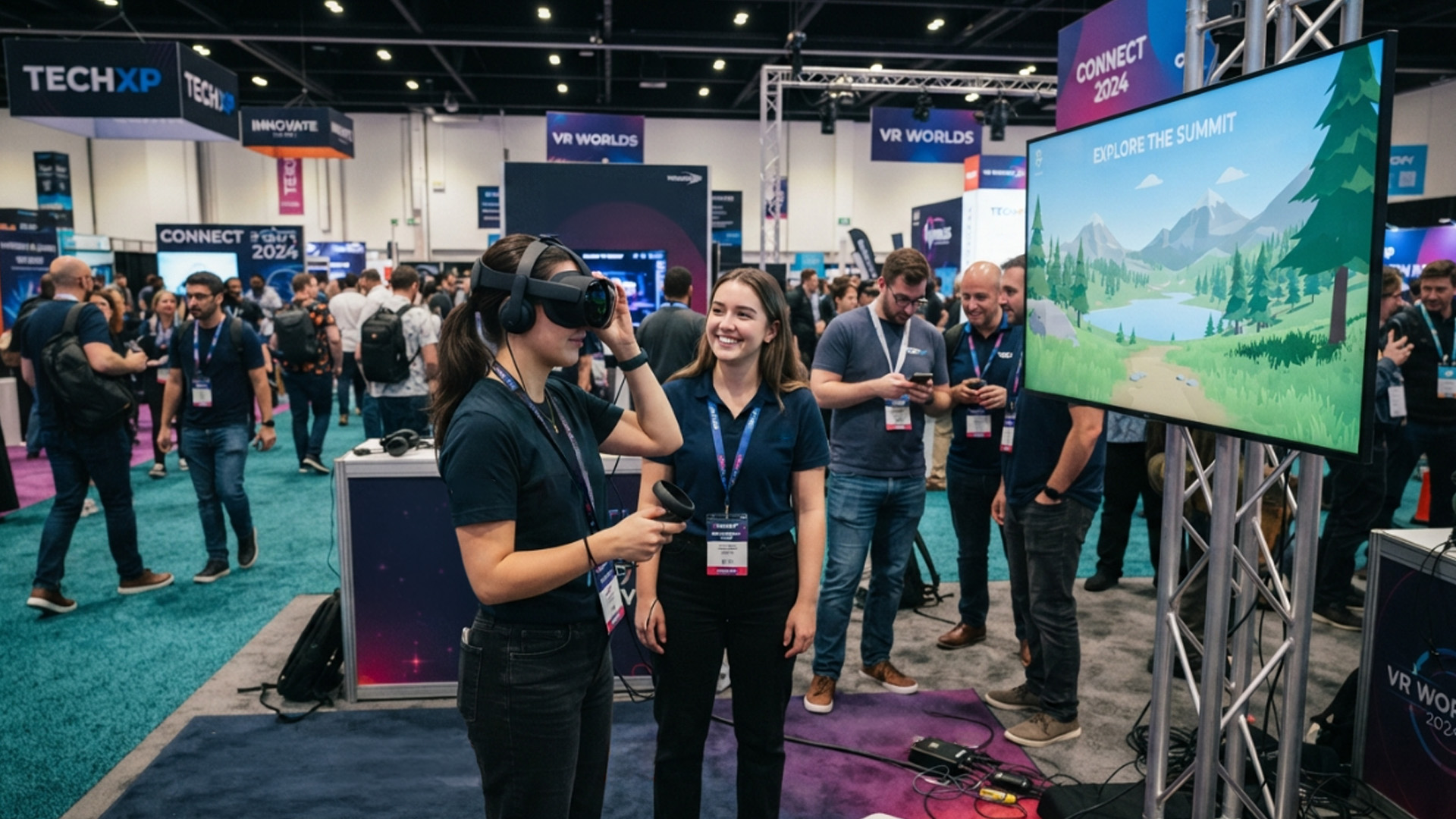
Designing a VR Activation Around the Event Goal
A VR event project should begin with the outcome the organiser wants to achieve. The goal may be to attract visitors to a stand, explain a new product, generate qualified leads, create social content or provide a memorable team-building activity.
Once that goal is clear, the experience can be designed around it. This avoids the common problem of building a visually impressive simulation that has no clear connection to the campaign or event audience.
A product launch may need a guided experience with a clear call to action. A public event may benefit from a fast, entertaining challenge that allows many people to take part. A corporate event may need a collaborative activity that encourages teams to communicate and solve a problem together.
Keep the Journey Clear From Queue to Follow-Up
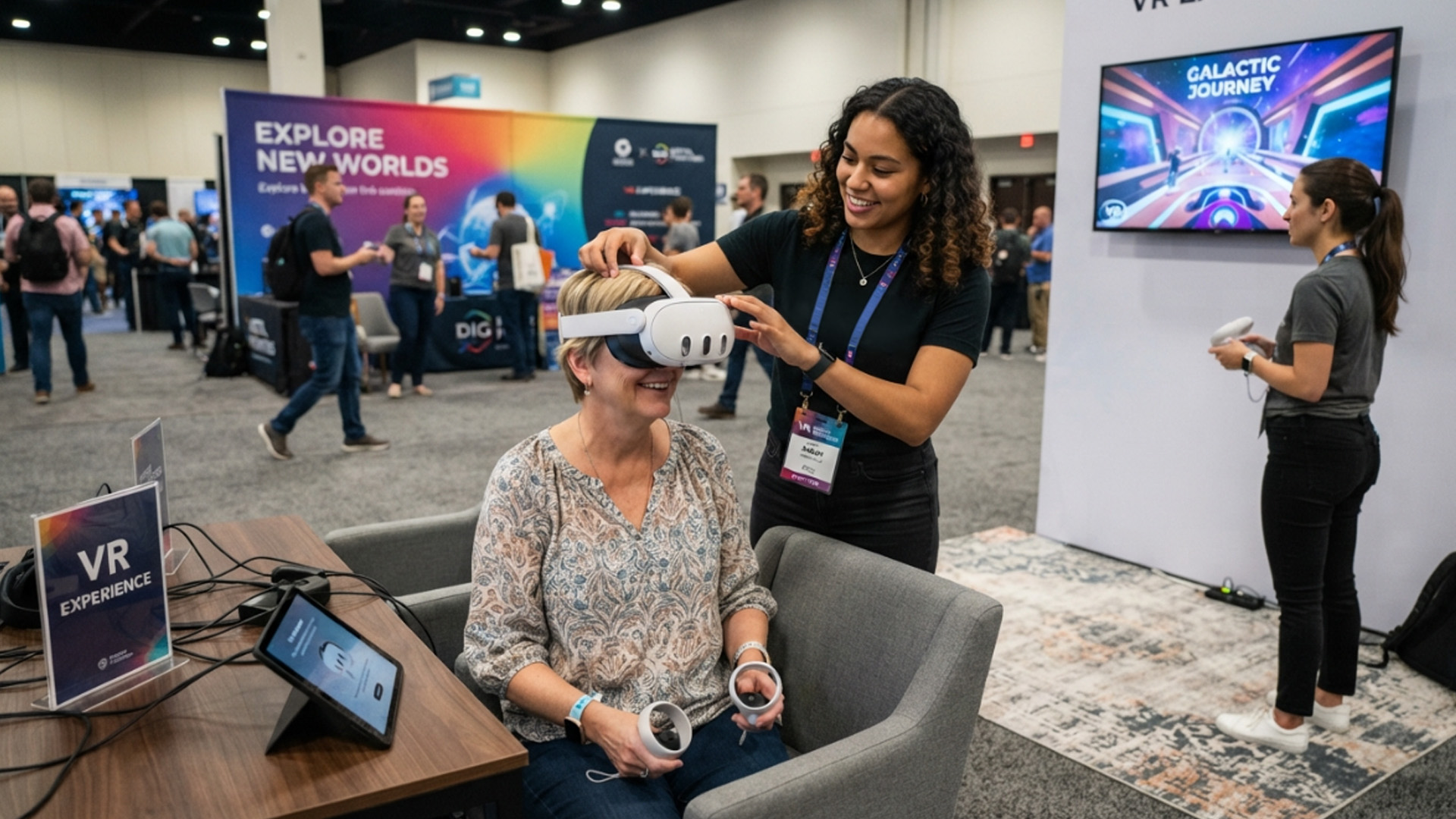
The attendee journey begins before the headset is worn. Visitors need to understand what the experience is, how long it will take and what they will get from it. Clear signage, a welcoming facilitator and a visible screen showing the current participant’s view can help attract interest without creating confusion.
The queue also needs attention. If people wait too long without knowing what is happening, the activation can lose momentum. A short pre-show video, product display or staff conversation can make the waiting time feel more useful.
After the experience, the next step should be obvious. This may be a conversation with a product specialist, a QR code for more information, a competition entry, a booking form or a shareable photo. The follow-up should connect naturally to what the attendee has just experienced.
Short Experiences Can Create Stronger Flow
At a busy event, a shorter experience often works better than a long one. It allows more people to participate and reduces the pressure on staff managing the activation. It also makes it easier for visitors to fit the activity into their event schedule.
This does not mean the content must feel rushed. A well-designed three-minute experience can have a clear introduction, a meaningful interaction and a memorable ending. The key is to focus on one central idea rather than trying to show every feature, product or message at once.
A practical event design also includes time for headset fitting, cleaning, instructions and reset between users. These details affect the number of people who can take part and the overall quality of the experience.
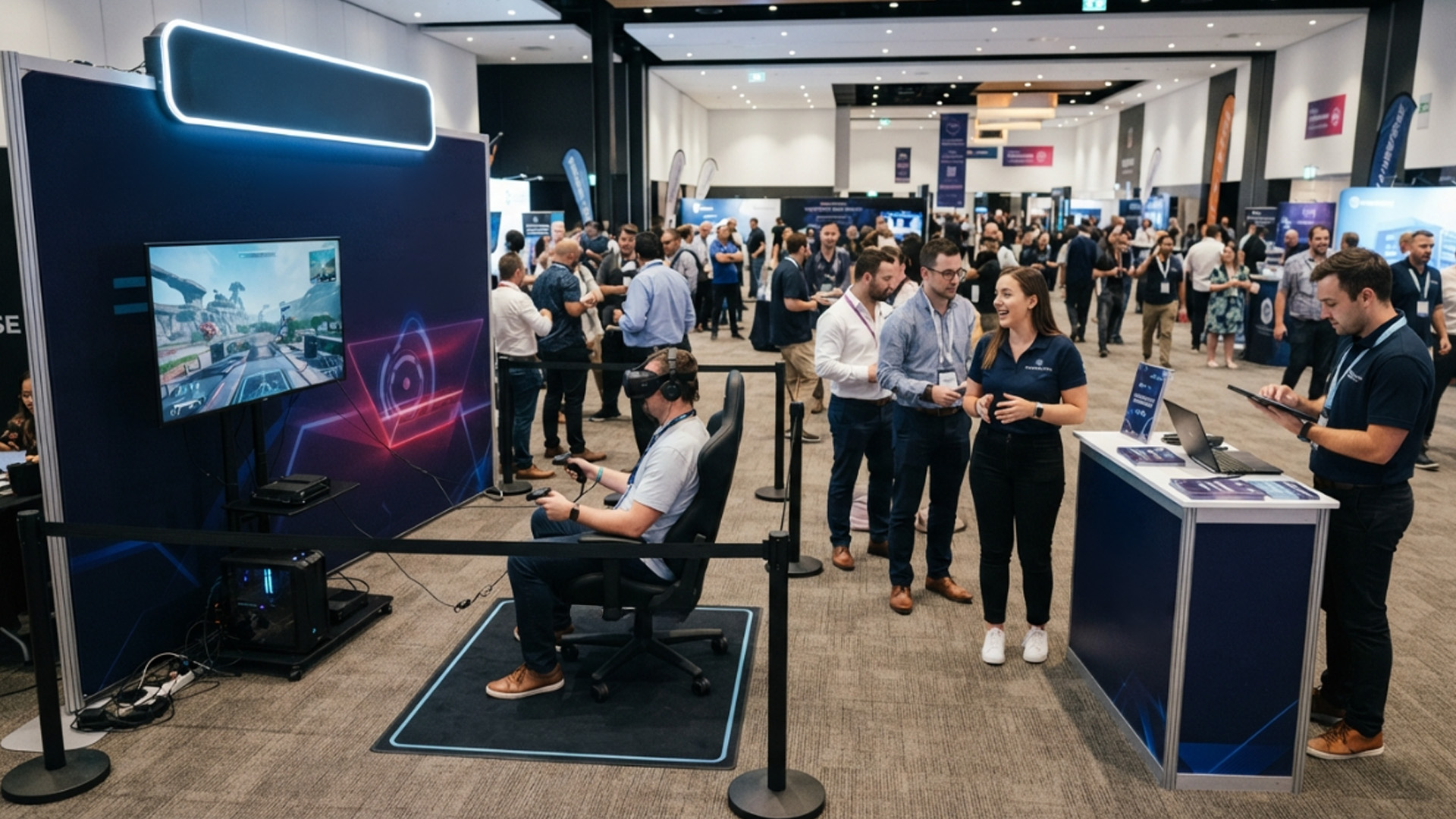
VR Event Formats That Work Across Different Industries
VR can support many types of events because it can be adapted to different audiences and goals. The same core technology can create a product demonstration, a virtual tour, a training scenario or a competitive game depending on how the content is designed.
For businesses, the important question is not whether VR is suitable in general. It is whether an immersive format can make the event message clearer, more engaging or easier to remember.
Automotive and Product Launches
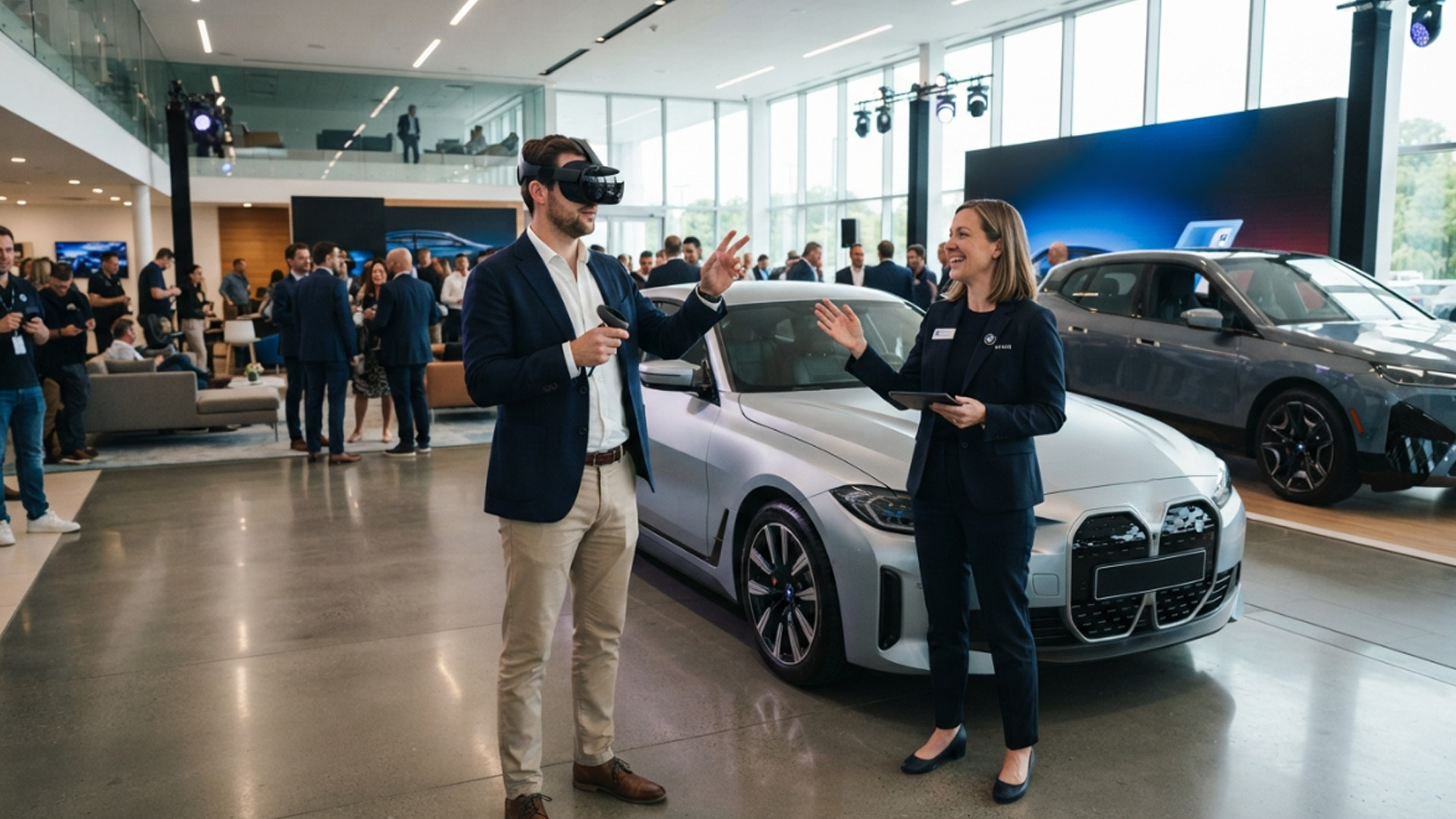
Automotive events are well suited to VR because vehicles have many features that visitors may not be able to explore fully on a busy showroom floor. A headset can place someone inside a vehicle, show different configurations or take them through a driving environment that would not be possible at the venue.
VR can also help launch products that are not yet available in physical form. A brand can show a concept vehicle, demonstrate a new feature or allow visitors to compare options before stock arrives. The experience should be supported by knowledgeable staff who can answer questions and connect the virtual demonstration to the real product.
Property, Tourism and Virtual Destinations
Property and tourism experiences depend heavily on place. A virtual tour can help people understand a future development, hotel, lodge, attraction or destination before they visit in person.
At a property event, VR can allow buyers to walk through an off-plan apartment, explore a show unit or compare layouts. At a tourism activation, it can take visitors to a beach, safari lodge, museum or adventure activity. This gives people a stronger sense of the environment than standard photographs alone.
The experience should be honest about what is being shown. If a development is still under construction, visitors should understand which elements are planned visualisations and which are already complete.
Making VR Events Comfortable, Safe and Inclusive
A good VR event experience considers the person wearing the headset as carefully as the digital content. Visitors may have different levels of familiarity with VR, different comfort needs and different reasons for taking part.
Facilitators play an important role. They can explain what will happen, help with headset fitting, guide first-time users and make sure people can stop the experience whenever they want. Their presence makes the activation feel more welcoming and reduces anxiety for people who have never used VR before.
The physical area also matters. There should be enough space for participants to move safely if the experience requires standing or turning. Cables, furniture and crowd movement need to be managed carefully. Seating can be useful for experiences that do not require walking.
Design for Comfort From the Start
Motion discomfort can affect some users, especially when virtual movement does not match what their body feels. Event experiences should avoid unnecessary fast motion, sudden camera movement and long sessions where possible.
Clear visual references, stable viewpoints and simple interactions can make an experience more comfortable. Participants should also have an easy way to pause or remove the headset without feeling pressured to continue.
A good activation does not assume every attendee will want to use VR. A screen-based version, staff-led demonstration or interactive display can allow other visitors to understand the content without wearing a headset.
Accessibility and Privacy Matter
Accessibility should be part of the event plan. Some visitors may not be able to wear a headset comfortably or may need assistance using the experience. Providing alternatives ensures that the campaign message remains available to everyone.
Privacy also needs consideration, particularly when an activation collects names, email addresses, photos or performance data. Attendees should understand what information is being collected, why it is needed and how it will be used. Clear consent processes help build trust.
If an event includes a leaderboard, competition or recorded video, organisers should make the participation rules visible and give attendees a simple way to opt out of sharing.
Measuring the Value of a VR Event Experience
The success of a VR activation should be measured against the original event goal. A busy queue may show interest, but it does not always show whether the experience helped the brand achieve a meaningful outcome.
For a product launch, useful measures may include qualified conversations, brochure requests, bookings or follow-up appointments. For a public campaign, the focus may be participation numbers, social sharing or time spent engaging with the experience. For a training event, organisers may look at completion rates, confidence levels or knowledge checks after the activity.
Collecting this information helps teams improve future activations. They can identify which content attracted the most interest, where visitors needed help and whether the experience led to the next action the campaign was designed to encourage.
Build Reusable Content Where Possible
A well-planned VR experience can have a longer life than one event. Content created for a product launch may later be used in a showroom, sales presentation, training session or online campaign. A virtual property experience can support both an exhibition stand and remote buyer meetings.
This makes it easier to justify the investment. Rather than treating the activation as a once-off production, teams can plan for how the content will be adapted and reused after the event.
VR events work best when they are designed around people, not just devices. A clear purpose, simple attendee journey, capable facilitation and meaningful follow-up can turn an immersive moment into a useful part of the wider event strategy.
Author: Elisha Roodt
Backed by 25+ years of VR and AR innovation in Johannesburg, sharing practical insights on immersive tech, real-world applications, and industry news across South Africa.